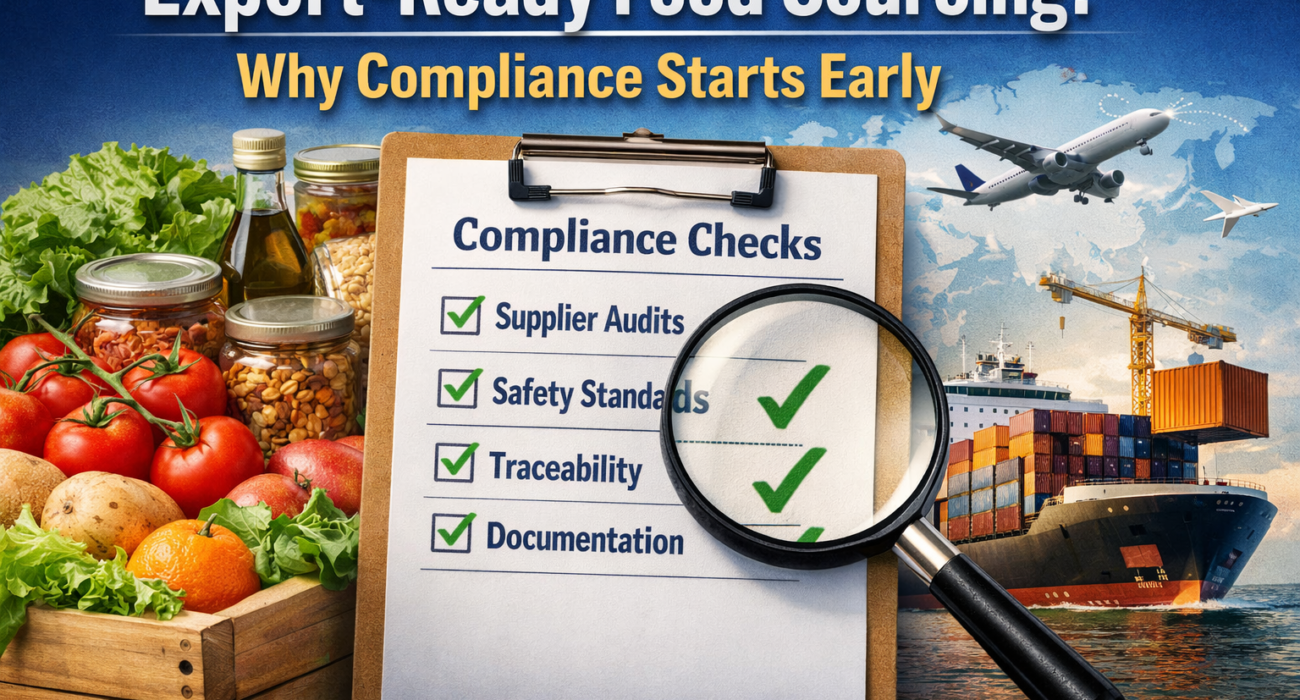
Jasmi Team Comments (0) January 28, 2026February 5, 2026 Compliance Is Not a Checkbox: Why Export-Ready Food Sourcing Starts Long Before Shipment In international food trade, compliance is often treated as a final step — something to “prepare” once products are ready to ship.For regulated markets, this is a costly mistake.True compliance starts long before production ends and well before logistics are booked. Why compliance must be built into sourcing Why compliance must be built into sourcingEuropean and North American authorities do not evaluate products in isolation.They assess systems, including:Processing methods (pasteurization or sterilization)Food safety management systemsTraceability and documentationSupplier consistency over timeA product can meet specifications and still fail market entry if compliance is not embedded upstream. The hidden risk of last-minute validation Many sourcing issues arise when buyers attempt to:Validate documentation too lateAdjust processing parameters after productionAlign suppliers with market rules post-contractAt that stage, options are limited, timelines are tight, and risk increases significantly. A compliance-first sourcing approach A structured approach includes:Supplier qualification before engagementValidation of processing methods against target marketsDocumentation checks aligned with destination requirementsEarly identification of regulatory gapsThis reduces delays, protects brand reputation, and ensures continuity. Final thought Compliance is not an administrative task.It is a strategic sourcing decision.When addressed early, it accelerates trade.When ignored, it becomes a barrier. Write to Us